
Myomectomy
Robotic Myomectomy – Prof. Dr. Taner Usta
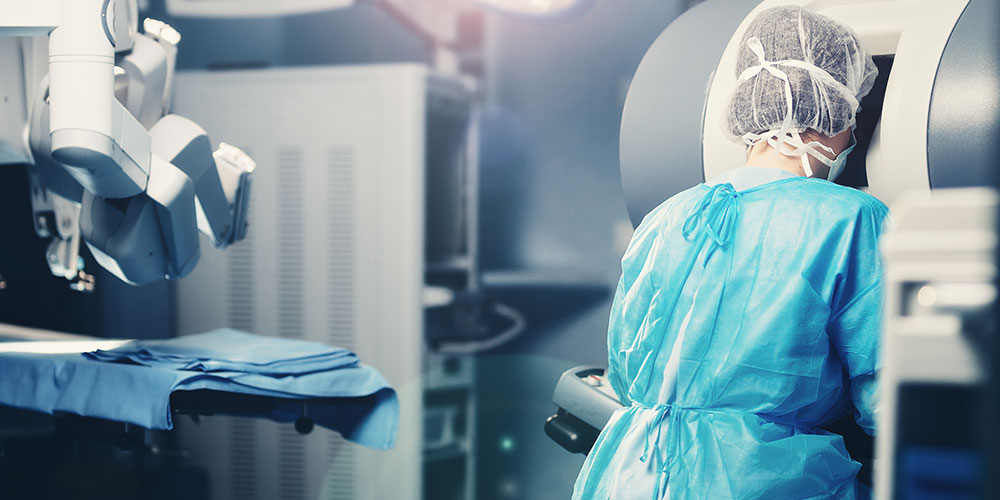

Operations are performed at Acıbadem Altunizade Hospital with the da Vinci robotic surgical system.
Request an AppointmentGeneral Information
Myomectomy is the procedure of removing the myomas (fibroids) in the uterus. Myomas (fibroids) are benign, that is to say non-cancerous, muscle tissue tumours in the uterus and they frequently appear during pregnancy. Myomectomy is usually performed for women who are experiencing problems because of uterine myomas and who wish to become pregnant. This procedure can be performed robotically, laparoscopically or by open surgery.
Myomas, which are seen in approximately 30-40% of women of reproductive age, are the most commonly encountered benign tumours of the female reproductive system. Myomas cause complaints in women such as frequent and irregular bleeding, pelvic pain, frequent urination and infertility. The definitive treatment of myomas is their surgical removal. Today, because of the developments in the field of minimally invasive surgery, myomas can now be treated with robotic surgery.
Thanks to robotic surgery, myomas can be treated with less blood loss, a shorter hospital stay and faster recovery. Thanks to the three-dimensional imaging system of robotic surgery, which provides tenfold magnification, not only is no piece of myoma left behind, but also, because the robot arms can work at far more angles than the human hand, the myoma bed is closed by being sutured (stitched) very well. In this way the possibility of rupture occurring in the patient’s uterus during a future pregnancy is reduced.
Symptoms
Myomas can generally cause symptoms such as low back pain, abdominal pain, burning on urination and frequent urination. In addition, because of myomas there may be greater blood loss during the menstrual cycle, and this may cause symptoms such as anaemia and fatigue. Some women may be unable to become pregnant because of myomas or may experience serious problems during delivery. The symptoms that may arise because of myomas (uterine fibroids) can be listed as follows:
- Low back pain
- Abdominal pain and bloating
- Burning on urination and frequent urination
- Greater blood loss during the menstrual cycle
- Anaemia and fatigue
- Inability to become pregnant or serious problems during delivery
If you are experiencing these or similar symptoms, it is strongly recommended that you consult a doctor. Your doctor will assess the treatment options most suitable for you and will make recommendations to you regarding treatment.
Risk Factors
What is the next step?
The first thing to do after a diagnosis of myoma is to talk to your doctor and consider the treatment options recommended to you. The treatment options may vary according to the size of your myomas, where they are located (their localisation) and the severity of your symptoms. The following may be the possible treatment options after a diagnosis of myoma:
Observation: If your myomas are very small and your symptoms are mild, your doctor may recommend observation only. This may mean following the growth rate of your myomas and moving on to treatment later if necessary.
Hormonal treatment: An imbalance of hormones such as oestrogen and progesterone may play a role in the formation of myomas. For this reason your doctor may recommend hormonal treatment. This treatment option aims to slow the growth of the myomas.
Surgical treatment: If your myomas are very large or your symptoms are severe, your doctor may recommend surgical treatment. Surgical options such as myomectomy and hysterectomy are procedures aimed at removing the myomas. Myomectomy aims to remove the myomas and the uterus is preserved. In hysterectomy, however, the uterus is removed and for this reason it may have consequences such as not being able to become pregnant. With advancing technology it is possible to perform closed surgery with both options. The method is decided on depending on the size and localisation of the myomas. The most important factor you should pay attention to in surgery is definitely the surgeon’s experience. Your doctor will recommend the surgical option most suitable for you.
After a diagnosis of myoma, it is important that you consider the most appropriate treatment option by talking with your doctor personally.
Myomectomy Operation
Endometriosis
Multidisciplinary Endometriosis Centre of Excellence
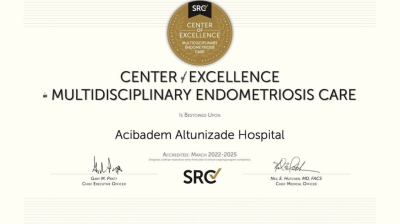
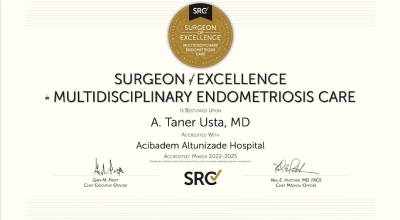
 First in Turkey
 2nd in Europe2.
 6th in the World6.
 Acıbadem Altunizade Hospital
Let’s decide on the right approach for you together
After your examination and imaging, we will discuss clearly whether robotic surgery is suitable for you.