
The History of Robotic Surgery
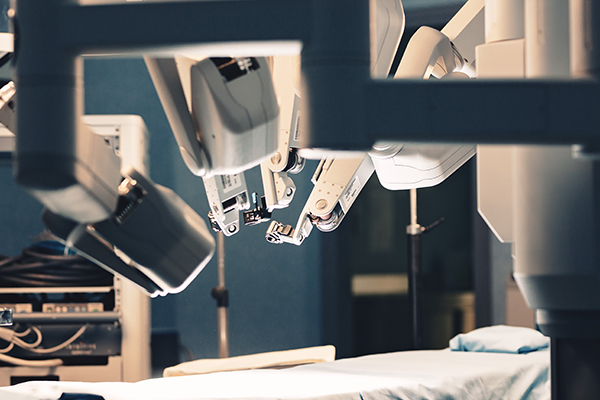
Today, the advance of technology has also led to many innovations in terms of medicine. With minimally invasive surgery becoming increasingly widespread, open surgery is now steadily decreasing and is applied only in a limited number of conditions. Foremost among the minimally invasive surgical methods are laparoscopy, robot-assisted laparoscopy and robotic surgery. In recent years robotic surgery has been used far more widely.
Robotic surgery first entered the records in 1985 with the use of the robot system named PUMA 560 to perform a brain biopsy. This important step was the herald of future development. Later, in 1987, a laparoscopic cholecystectomy (removal of the gallbladder) was performed with the help of a robot for the first time, and in 1988 a transurethral resection operation (removal of the prostate) was carried out.
In 1990 the AESOP system produced by the Computer Motion company was approved as an endoscopic surgical system by the American Food and Drug Administration (FDA) for the first time. Then, in 2000, the da Vinci Robotic Surgery System received approval from the FDA for general laparoscopic surgery. For the first time the FDA had approved all the sections of a system (the surgical instruments and camera sections). With this development, robotic surgery began to become increasingly widespread in many surgical departments.
It began to be used especially in the departments of obstetrics and gynaecology, urology, general surgery, cardiovascular surgery, thoracic surgery and ear, nose and throat surgery.
Let’s decide on the right approach for you together
After your examination and imaging, we will discuss clearly whether robotic surgery is suitable for you.