
10 Years in Our Lives… So What Do We Know About the Benefits of Robotic Surgery?
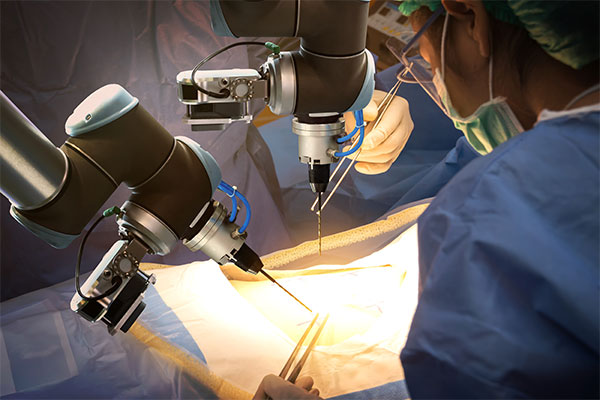

Operations are performed at Acıbadem Altunizade Hospital with the da Vinci robotic surgical system.
Request an AppointmentAlthough the history of robotic surgery does not go very far back, the number of operations performed is increasing rapidly with each passing day. In 2014 alone, the number of operations carried out worldwide with the da Vinci robotic surgery system was more than 570,000, and this number continues to grow by 10% every year.
Robot-assisted operations are performed in many departments, foremost among them gynaecology, cardiac surgery, urology, general surgery and ear, nose and throat.
Today, 75% of the operations performed with robotic surgery are carried out in the fields of urology and gynaecology. Robot-assisted operations are regarded as a more technological version of standard laparoscopy, and by improving the limited aspects of that method they provide more advantages for both the patient and the surgeon.
The Advantages Robotic Surgery Brings
Because robotic surgery is a more advanced version of the laparoscopic method, it takes the advantages that laparoscopy has over open surgical interventions one step further. It also has important advantages of its own compared with laparoscopy. Robot-assisted operations play an important role in improving the operative process for both the patient and the surgeon. The surgeon performs the operation seated comfortably at the console of the device. This also increases their ability to concentrate.
In addition, the three-dimensional image offered by robotic surgery, the zoom options and the ability to perform more precise procedures also increase the chance of success of the operation. This method also makes it possible for doctors who are not present in the operating area to follow the situation and give advice.
During and After the Operation
With the innovations brought by robot-assisted operations, important improvements have been achieved both during and after the operation. Thanks to robotic surgery, less bleeding occurs during the operation and as a result the patient needs fewer blood transfusions.
Because the four-armed robot does not tremble like the human hand and can move far more precisely, the damage caused to the surrounding tissues around the surgical area during the operation is also kept to a minimum.
The fact that the operation is performed through a small incision minimises the risk of infection and also ensures that the scar after the operation is very small and reaches a level that cannot be seen by the eye over time. Again, with the robot there is less pain and less use of painkillers after the operation. In this way the patient’s treatment process is also shortened and the return to social life takes place more quickly.



Let’s decide on the right approach for you together
After your examination and imaging, we will discuss clearly whether robotic surgery is suitable for you.